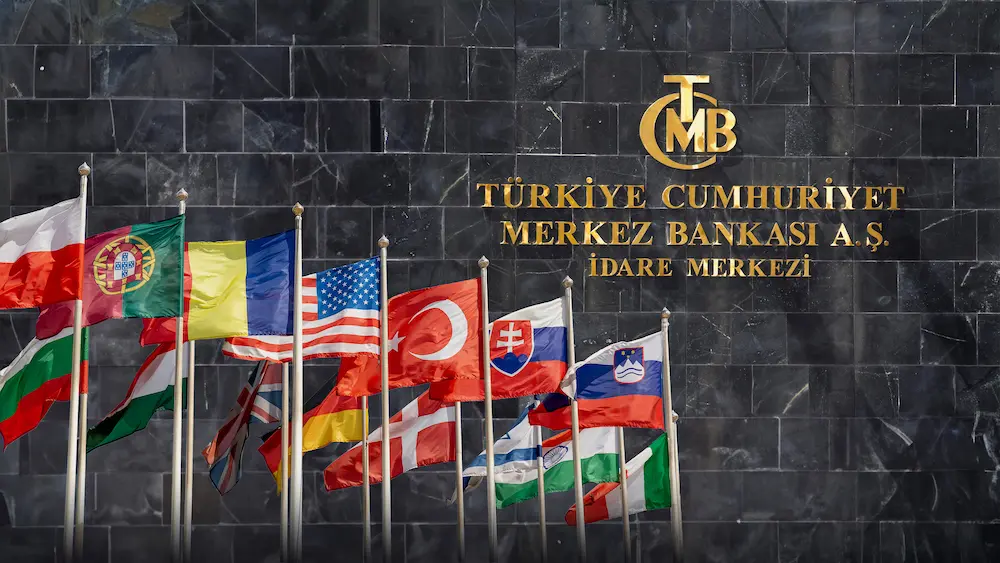
The Central Bank of Türkiye: Significant Strides Since June Election
The Central Bank of Türkiye has made significant strides since Türkiye’s June election. New Treasury and Finance Minister Mehmet Şimşek, along with Central Bank Governor Hafize Gaye Erkan, are tackling pressing economic issues. Their focus includes fostering growth while curbing inflationary effects on the Lira and the broader market. Meanwhile, leading financial institutions are closely monitoring these developments, anticipating a new economic environment for Türkiye.
Institutional Opinion: Positive Signals Ahead
Recent shifts in Türkiye’s economic policy have attracted attention from major financial institutions. Goldman Sachs, the European Bank for Reconstruction and Development (EBRD), and Standard & Poor’s (S&P) have provided insights relevant to foreign real estate investors.
Goldman Sachs: Türkiye ‘Back in the Game’
Goldman Sachs released a report titled “Türkiye is back in the game,” emphasizing aggressive monetary tightening to combat inflation and stabilize the Lira. The Central Bank has tripled its benchmark one-week repo rate to 30% and is prepared to raise rates further if necessary.
The report predicts that if the policy interest rate exceeds 40% by year-end, Türkiye’s real rates could turn positive, surpassing the inflation forecast for the next 12 months. This may reignite interest among foreign investors, particularly those engaged in carry trade—borrowing in low-interest-rate currencies to invest in higher-yielding ones.
EBRD: Growth Outlook and Capital Inflow
The EBRD has revised Türkiye’s growth outlook from 2.5% to 3.5% for 2023. This revision reflects fiscal stimulus before the May elections and a post-vote shift in economic policy. Notably, the EBRD observed an inflow of foreign capital, signaling a return of foreign investors. Increased foreign capital often correlates with heightened activity in the Turkish real estate sector, making this particularly relevant for investors.
Standard & Poor’s: From ‘Negative’ to ‘Stable’
S&P has updated Türkiye’s outlook from “negative” to “stable,” affirming its credit rating at B. The agency attributes this change to the Central Bank’s aggressive rate hikes and the introduction of indirect taxes by the Treasury. These balanced risks could help stabilize Türkiye’s economy by 2026, boosting confidence for foreign investors contemplating long-term investments in the real estate market.
Balancing Act Between Growth and Inflation
Governor Erkan recently addressed Parliament, emphasizing the Central Bank’s commitment to achieving price stability without hampering economic growth. Official data indicates that annual inflation rose to 61.5% over the year ending in September. However, month-over-month price increases have shown signs of slowing, dropping to nearly 4.8% in September from 9.1% in August.
She noted various factors contributing to inflation, including wages, exchange rates, and recent tax hikes. The Central Bank’s strategy includes monetary tightening alongside simplification within the macroprudential framework, aiming to enhance macro-financial stability.
Future Plans: Diplomatic Efforts for Economic Stability
As Türkiye continues its economic overhaul, key government figures are taking their message to the international stage. Minister Şimşek is set to meet with investors in London, following similar meetings in New York and the Gulf states. These efforts aim to attract international investments to support Türkiye’s policy shifts. Since June, Türkiye has secured $10.4 billion in external financing, bolstering its banking and real sectors.
In parallel, Governor Erkan will hold meetings with international investors at the IMF forum in Marrakech. This marks her first interaction with foreign banks and funds since her appointment in June.
Concluding Thoughts for Foreign Investors
In summary, Türkiye is undergoing a significant economic transformation characterized by aggressive monetary policies and a shift towards more orthodox strategies. Key figures are actively engaging with international investors to bolster Türkiye’s economic standing. For foreign real estate investors, this presents a unique opportunity. The government’s diplomatic efforts and medium-term plans indicate a commitment to economic stability and openness to foreign capital.
However, investors should remain cautious, considering the volatile nature of economic reforms and geopolitical factors.